History of M Shed

M Shed sign
© Photodabek

The History of M Shed

The M Shed site is today a bustling location close to the city centre, part of the historic dockside which now plays a major role as a residential location and favourite place to spend leisure time for many Bristolians and visitors.

Before the start of the 1700s the area was agricultural land alongside the River Avon.  From that point on things began to change and from about 1700 through to roughly 1865 ship building yards dominated the area.  With the subsequent construction of quays, the name of Princes Wharf came in to being.  The wharf played an important role in the transfer of goods from ships for both import and export.  At the time of the Second World War, the site housed a large granary as well as transit sheds for storing goods.  War-time bombing destroyed the granary and sheds.

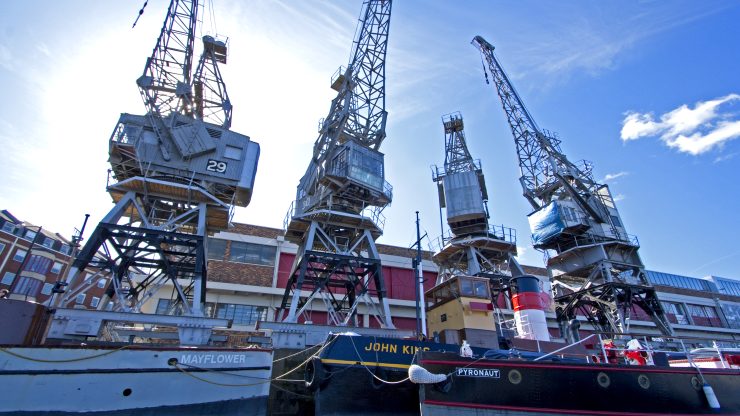
After the war the area was cleared and prepared for redevelopment as a new general cargo wharf.  L and M Sheds were so called as previous transit sheds in the docks had all been labelled sequentially in alphabetical order.  Connected at first floor level, they were separated on the ground floor by a haulingway cutting across the building and linking the quayside and the road beyond.  The sunken rails around the building allowed steam engines to haul in and away truckloads of goods, directly beneath the towering electric cranes used to load and unload the shipping.  Of steel and concrete construction, the building design was utilitarian and very typical of the post-war austerity years.

The new wharf began operations in 1952 with the Bristol Steam Navigation Company using M Shed. In the following years a diverse range of goods made their way through M Shed, to and from locations across the world such as the Soviet Union and providing raw materials for local industries such as board for the paper mills.

In the mid-1960s Bristol City Council decided to close the Docks to commercial traffic and the run down of the facilities began.  Much of the trappings of industry were removed and the iconic cranes that framed the skyline began to be scrapped.  A local pressure group was formed of people who wanted to see part of the city's heritage retained which resulted in the group purchasing two cranes and a further two being bought by the City Council.  Around the same time, the Council's Museums Service had taken over responsibility for the nearby Fairbairn Steam Crane.  This heavy duty crane was installed on the quay in 1878.  Used sporadically over the decades it proved useful into the second half of the 20th century.  It is now a Scheduled Ancient Monument.

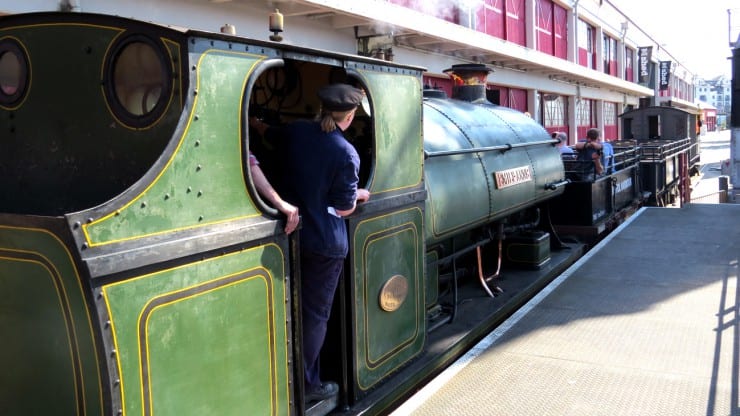
The Bristol Industrial Museum opened its doors in M Shed in 1977 and the upper floor of L Shed was also taken over to be the large object store for the museums service soon after. The lower floor of L Shed was briefly home to the National Lifeboat Museum between 1981 and 1988.  A working steam railway was an accompaniment to the Industrial Museum from the earliest days, running along the dockside and helping to retain an echo of the working dock itself.  The Industrial Museum became an exceptionally popular venue for Bristolians, particularly those south of the Avon, and a great place to take visitors to show off the docks and the city's heritage.

The arrival of the National Lottery in the 1990s offered an opportunity for the Industrial Museum to be revamped and for the city of Bristol to gain a brand new facility telling in one place the complex and fascinating history of one of the country's most important cities, both in the past and currently.  With funding primarily from the Heritage Lottery Fund and Bristol City Council along with several other major funders, the new museum M Shed opened in 2011.

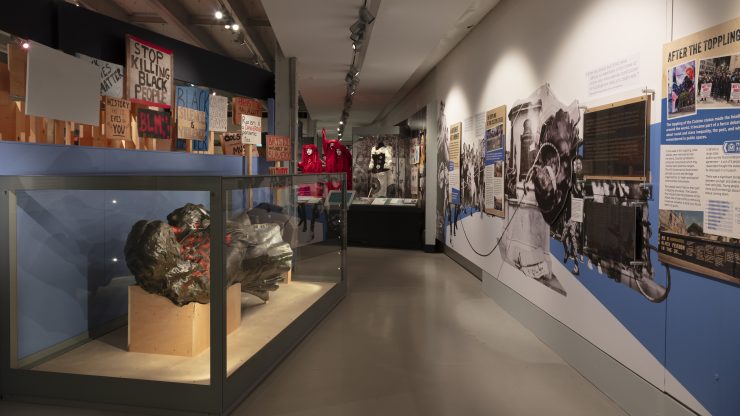
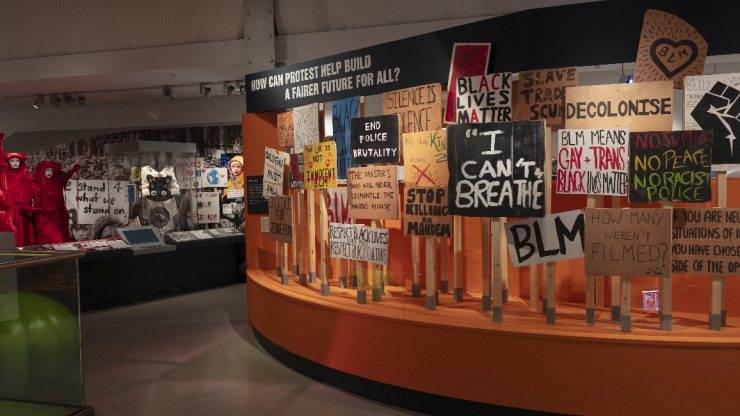
M Shed is a new type of museum.  It is not just a city history museum.  What it seeks to do is to reflect people's experiences of living or visiting the city across time.  It aims to tell people's stories of what they have seen and done, in the first person if possible, and to illustrate those stories with 3-d objects from across the museums service along with 2-d archives from the Bristol Record Office.  As well as the historic stories, the museum seeks to reflect contemporary issues and to encourage visitors to contribute their own experiences through the use of computer kiosks (and remotely via the website).  The three main galleries are complemented by more in depth material held on databases and also by a dynamic programme of events and activities aimed at bringing the museum to life.  The museum should act as a physical and virtual gateway to exploring all things Bristolian and reflect how very one of us contributes something to the society we inhabit.

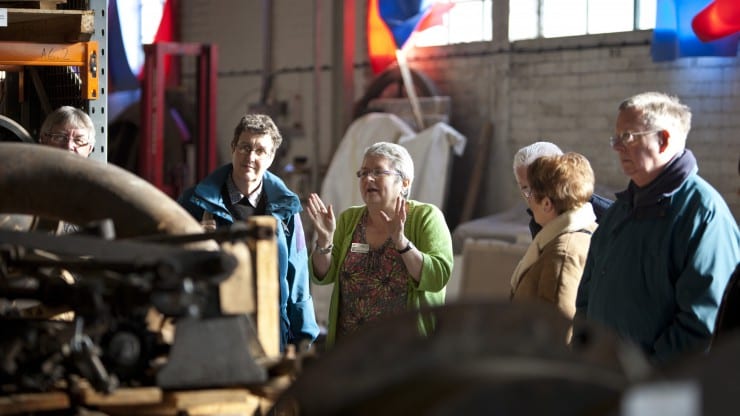
To deliver this vision, M Shed, and to a lesser extent L Shed, have been transformed by a multi-million pound make over. LAB Architects have designed the new atrium which acts as the entrance foyer and stands where the old haulingway used to divide the two sheds. They have revamped the old gallery spaces of the Industrial Museum and added a new temporary exhibition gallery and conference suite on to the roof.  All this has been done sensitively so as not to lose that feeling of how the working dockside would have looked in its heyday of the 1950s. The refurbished electric cranes, the steam engines pulling visitors along the dock and the three museum boats taking passengers for trips around the waterway all kept alive by a team of enthusiastic volunteers continue to assist in retaining that mix of the old and new.